Search Is Still Valuable, but the Rules Are Changing
For years, many entrepreneurs treated search traffic as a fairly simple game. Publish useful content, rank for the right keywords, get the click, and lead that visitor into your ecosystem. That model still matters, but it is no longer the whole picture.
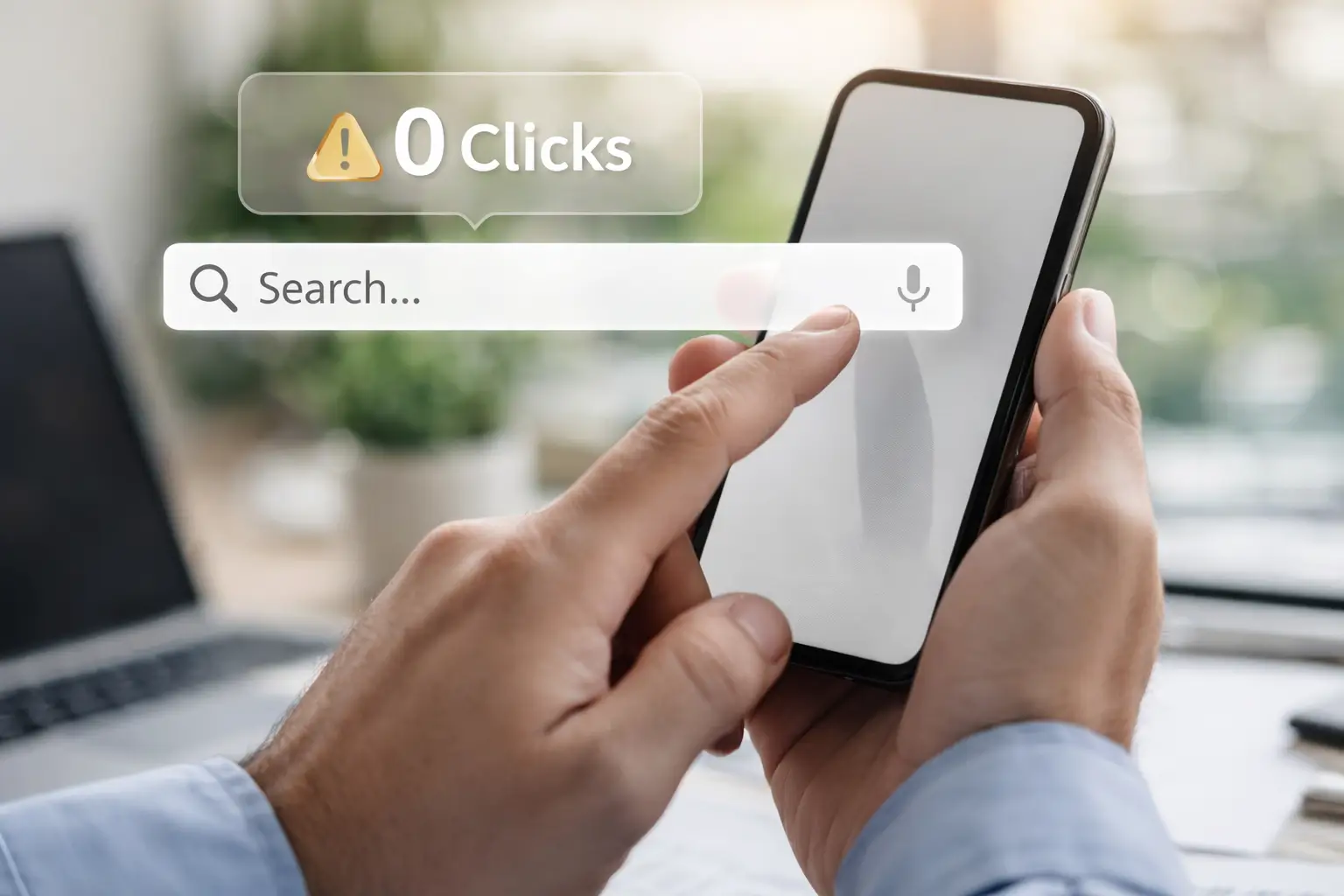
Today, search engines can answer questions directly on the results page. Users can see summaries, featured snippets, maps, reviews, product details and business information, and AI Overviews without clicking through to a website. Availability and appearance vary.
Here, zero-click search means a search that produces no click through to an external website. The user may find enough information in Search, reformulate the query, or stop searching. A missing visit to your own site does not show which of these happened.
This behavior predates AI Overviews, and AI answers can also lead people to supporting websites. AI Overviews summarize some search topics; AI Mode supports more exploratory questions and follow-ups. Both can include links to supporting websites.
For entrepreneurs, this can feel frustrating at first, especially if content has been a major part of lead generation. But this is not just a story about lost clicks. It is a story about how attention is being redistributed.
The businesses that adapt well are usually the ones that stop measuring value only by page visits. They start asking a better question. If people do not click, can my brand still be seen, trusted, and remembered?
Visibility Now Matters Alongside Traffic
A zero click world changes what success looks like. It is no longer enough to think only in terms of ranking and visits. You also need to think about whether your business is showing up in the places where search engines pull answers from and where customers make quick judgments.
For example, a local business might not always get the website click, but if its reviews, business details, and reputation show up clearly in search, that visibility may still help potential customers.
These are possible scenarios, not measured outcomes: a consultant may lose some blog traffic but gain authority if their brand becomes associated with useful, quotable expertise. An ecommerce business may see fewer informational clicks while still benefiting from stronger product visibility and branded searches.
This means entrepreneurs should broaden the definition of discoverability. Search is no longer just about driving a session. It is also about owning a position in the customer's mind.
A useful shift is to think of search in three layers:
- Visibility, are you showing up at all
- Credibility, do you look trustworthy when you appear
- Conversion path, do people know where to go next if they want more
Traffic still matters, of course. But traffic without trust has always been weak. Zero click search just makes that truth harder to ignore.
Informational Content Needs a Stronger Purpose Now
Short answers to some informational queries can be supplied within Search. If a result satisfies the reader's need, there may be less reason to visit the source page; the effect depends on the query and the value the page adds. Google describes quick-answer searches that do not lead to further clicks, but that does not establish which article categories lose the most visits.
That does not mean entrepreneurs should stop publishing content. It means the content has to do more.
Go beyond answer-first basics
A good article today should not stop at the obvious answer. It should add interpretation, experience, examples, judgment, and practical context. These are suggestions consistent with Google's guidance on original content for AI search experiences and helpful, reliable, people-first content; they do not promise rankings, citations, or traffic. Those are the elements that make someone want more than a summary.
For instance, instead of only explaining what customer retention is, show how a small business can improve retention in the next 30 days with one email sequence, one offer adjustment, and one follow-up habit. Instead of defining brand positioning, explain why many founders misjudge their real competition and how that leads to weak messaging.
That kind of content still has search value, but it also has human value that a short generated answer often cannot fully replace.
Create content people want to continue from
One strong test is this. After reading the core answer, would a thoughtful person still want your perspective? If the answer is no, the article may be too generic. If the answer is yes, you are building something more durable.
The best content for entrepreneurs now often includes lived examples, strategic tradeoffs, mistakes to avoid, and clear next steps. That is where trust grows.
Brand Search and Reputation Deserve Attention
Branded searches can indicate that someone already knows your business, product, or name. They can help you assess recognition, but do not establish purchase intent or commercial value on their own. Google's branded-query filter announcement describes a way to distinguish branded and non-branded searches; it does not establish those business outcomes.
This is one reason brand building matters more than many entrepreneurs realize. If people remember you after encountering your content, podcast interview, YouTube clip, guest post, social post, or customer recommendation, they may search for you directly later.
This also means your public brand footprint matters. When people look you up, what do they find? Is your website clear? Are your reviews solid? Does your messaging feel current? Do your social profiles and business listings reinforce trust, or create doubt?
Entrepreneurs should treat search results for their brand as part of the customer experience. In some cases, it is the customer experience before the customer ever visits the site.
What Entrepreneurs Should Do Next
Zero click search is not a reason to panic, but it is a reason to get sharper. The smartest response is not trying to fight the shift. It is building a business that benefits from search in more than one way.
A practical response looks like this:
- Focus on content that adds insight, not just definitions.
- Strengthen branded content and make your expertise easier to remember.
- Improve your website and search presence so your business looks credible at a glance.
- Invest in channels that build recognition outside search, such as email, referrals, partnerships, and social content.
- Make sure every article, page, and profile leads naturally to a next step.
The deeper lesson is simple. Entrepreneurs should not build a business that depends entirely on borrowed traffic. Search can still introduce people to you, but your long term strength comes from being memorable enough that people look for you specifically.
For a practical way to assess content, branded demand, and visit outcomes, see Grow Organically When Search Traffic Gets Harder.
Try this: Identify one page that answers a customer question. What useful example, evidence, or next step does it offer beyond the short answer? Improve that specific gap before assuming the page needs to be longer.
Conclusion
Zero click search means entrepreneurs can no longer assume visibility will automatically turn into website visits. Useful answers can appear within Search, while links still let readers explore further. Treat brand recognition and distinctive content as strategies to test, not guaranteed substitutes for website visits.








0 Comments